
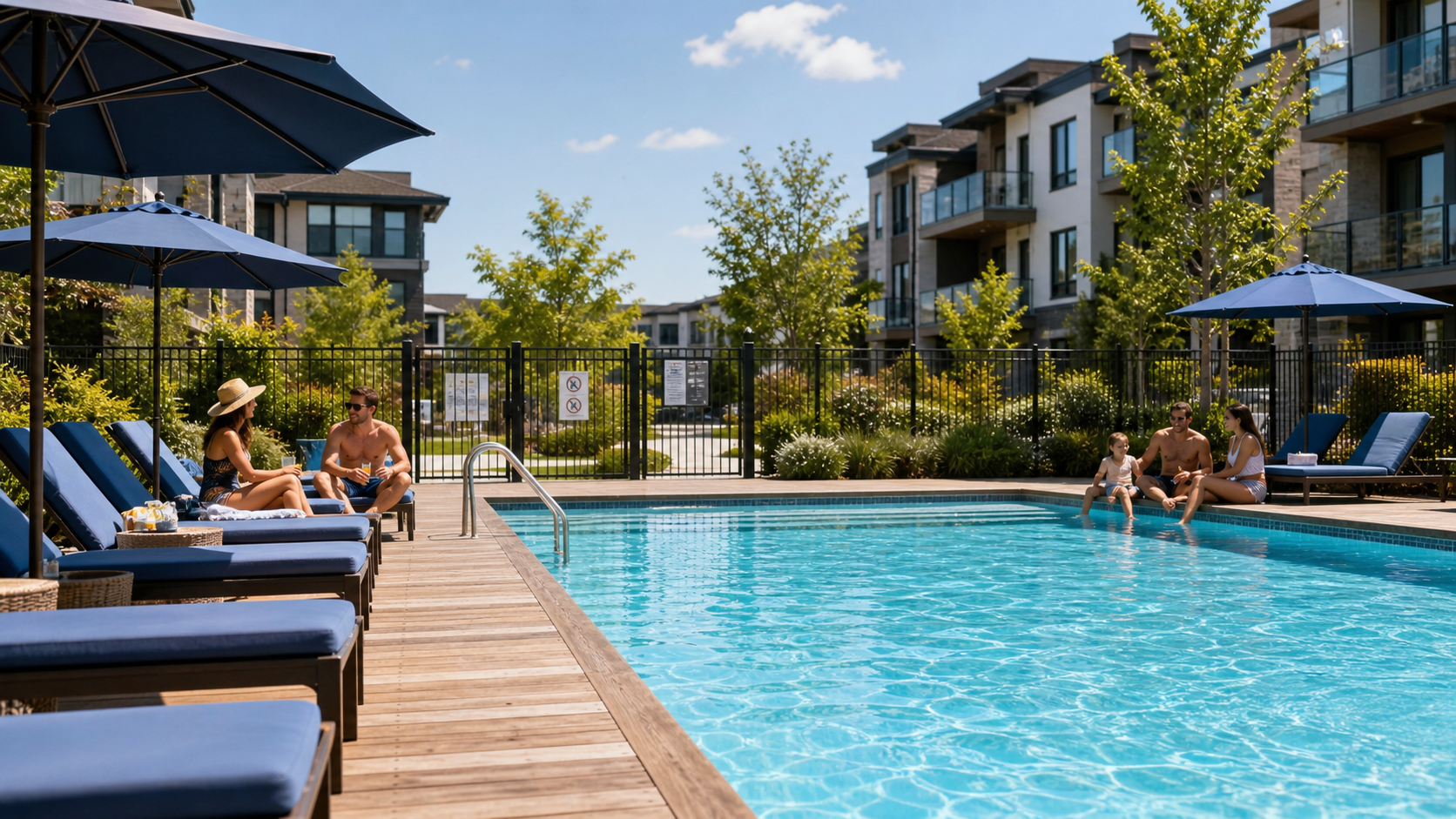
Townhome and condo pool management is different from managing a large subdivision pool or private club. The pool may be smaller, but the operational pressure can be much higher because more residents live close to the amenity, share limited space, and expect fair access.
In dense communities, a pool is not just a place to swim. It affects noise, guest traffic, parking, property rules, resident satisfaction, maintenance costs, and the overall quality of shared living.
That is why townhome HOA managers and condo boards need a clear system for resident pool access, maintenance, vendor communication, rules, safety, and seasonal planning. For communities that need outside support, commercial pool management services can help organize pool operations without turning the amenity into a constant board headache.
Quick Answer
The best townhome pool management approach combines clear access rules, reliable maintenance, visible safety practices, consistent communication, and a vendor scope that matches how residents actually use the pool.
Townhome and condo communities should pay special attention to guest limits, pool hours, noise, overcrowding, access control, cleaning frequency, repair response, and resident communication because those issues affect daily quality of life.
Why Dense Housing Pools Need a Different Plan
A townhome or condo pool often serves residents who live only steps away from the amenity. That convenience is valuable, but it also means problems are noticed quickly.
If the gate is loud, residents hear it. If the pool is crowded, nearby homeowners see it. If guests take over the space, regular residents complain. If the deck is dirty, it reflects on the whole property.
This makes shared amenity management more personal in dense housing. The board is not only managing water quality. It is managing neighbor experience.
The Shared Amenity Challenge
Townhome and condo pools usually face a different set of pressure points than larger planned communities. The space is tighter, the rules need to be clearer, and resident expectations are often more immediate.
| Shared amenity issue | Why it matters in townhome and condo communities |
| Limited deck space | Overcrowding feels worse when the pool area is compact |
| Close residential units | Noise, lighting, and after-hours use affect nearby homes |
| Guest traffic | Too many guests can reduce resident access |
| Parking pressure | Pool visitors may compete with resident parking |
| Access control | Fobs, gates, and codes need consistent oversight |
| Furniture wear | Small pool areas often have limited seating |
| Rule enforcement | Residents expect fairness and consistency |
| Maintenance timing | Service visits must avoid unnecessary disruption |
| Communication | Residents need clear updates about closures, repairs, and rules |
This is why townhome pool management should be built around daily usability, not just seasonal opening and closing. In some states, HOA pool partners specifically highlight townhome and apartment communities in their services, such as HOA pool management company Georgia for townhome-focused operations.
Build Around Resident Access
Resident pool access is one of the biggest management issues in multi-unit pool operations. The pool should feel available to residents, but not uncontrolled.
A good access system answers three questions:
- Who can use the pool?
- When can they use it?
- How is access managed and enforced?
Many townhome and condo communities use keys, fobs, cards, gate codes, or controlled entry systems. The system itself matters, but the policy around it matters just as much.
| Access decision | Board or manager question |
| Resident eligibility | Are owners, tenants, and approved occupants treated differently? |
| Guest access | How many guests can each household bring? |
| Pool hours | Are hours reasonable for nearby homes? |
| After-hours use | What happens if residents enter after closing? |
| Lost fobs or keys | How are replacements handled and charged? |
| Short-term rentals | Are guests allowed to use the pool? |
| Suspended access | Can access be removed after serious rule violations? |
| Pool parties | Are private reservations allowed or limited? |
The goal is not to make access difficult. The goal is to keep the amenity fair, safe, and usable for the people who pay for it.
Write Rules for Real Behavior
Condo and townhome pool rules should match real resident behavior. Rules that look good on paper but are never enforced will only frustrate the community.
The most useful rules are specific, visible, and tied to common pool-area problems.
Guest Rules
Guest limits are especially important in smaller pool areas. A few households bringing large groups can make the pool feel unavailable to everyone else.
A practical guest policy should explain how many guests are allowed, whether residents must stay with guests, and whether guest rules change during busy times.
Noise Rules
Noise matters more when homes are close to the pool. Boards should define music expectations, quiet hours, pool closing times, and behavior that affects nearby units.
Clear hours can prevent conflict between residents who want to enjoy the pool and residents who live beside it.
Food and Drink Rules
Food and drink rules should be realistic. If food is allowed, the community needs trash control and cleaning expectations.
Glass restrictions should be clear because broken glass can create serious safety and closure issues.
Pool Party Rules
Pool parties can create crowding, noise, and cleanup concerns. If reservations are allowed, the board should define guest limits, time blocks, deposits, cleanup responsibility, and whether extra staffing is needed.
For communities that accept reservations, a clear pool party reservation process can help avoid confusion and reduce informal use of shared space.
Create a Maintenance Rhythm That Fits the Property
Townhome and condo pools may be smaller, but they still need consistent maintenance. In fact, smaller pools can show problems quickly because there is less space and often less margin for heavy use.
The maintenance rhythm should reflect resident volume, landscaping, debris, weather, pool size, and how often the amenity is used.
| Maintenance area | What managers should watch |
| Water clarity | Cloudiness, color changes, foam, or unusual odor |
| Deck condition | Trash, spills, standing water, trip hazards |
| Furniture | Broken chairs, missing umbrellas, crowded layout |
| Gates and access | Latches, locks, fobs, keypads, propped gates |
| Restrooms | Supplies, odor, drainage, cleanliness |
| Skimmers and baskets | Debris buildup from landscaping or heavy use |
| Equipment area | Pumps, filters, leaks, feeders, unusual sounds |
| Signs and rules | Faded, missing, or outdated signs |
A community with heavy weekend use may need more frequent service than a quieter property, even if the pool is similar in size. The right schedule should be based on actual use, not only square footage.
For communities that need help connecting routine care with equipment awareness, aquatic facility maintenance can support a more organized maintenance plan.
Manage the Pool Area Like a Shared Room
A townhome or condo pool is similar to a shared clubhouse room. Residents may use it casually, but it still needs rules, upkeep, and accountability.
Managers should think about the pool area in zones.
| Zone | Common issue | Management focus |
| Entry gate | Propped gates, broken locks, tailgating | Access control and safety |
| Pool deck | Crowding, trash, wet surfaces | Cleanliness and movement |
| Seating area | Broken furniture, saved chairs | Resident fairness |
| Restrooms | Supplies, mess, odor | Cleaning and inspection |
| Equipment room | Leaks, noise, chemical storage | Vendor access and maintenance |
| Fence line | Climbing, damage, landscaping debris | Security and visibility |
| Nearby homes | Noise, lights, late use | Resident quality of life |
This zone-based view helps boards and managers spot issues that a simple pool-cleaning checklist might miss.
Decide If Staffing Is Needed
Not every townhome or condo pool needs lifeguards. Some communities operate without on-deck staff where allowed, while others use attendants, monitors, or certified lifeguards based on pool size, resident expectations, insurance guidance, and local requirements.
The important thing is to define the staffing model clearly. Residents should know whether a lifeguard is present, whether an attendant is only checking access, and whether swimming is unsupervised.
| Staffing model | Best fit | Important note |
| No on-deck staff | Smaller communities where allowed | Signs, rules, access control, and inspections become more important |
| Pool attendant | Communities needing access checks or rule reminders | Attendants are not lifeguards |
| Lifeguard coverage | Communities that need active water supervision | Certification and scheduling must be managed |
| Peak-time staffing | Busy weekends, holidays, or pool parties | Residents need clear staffing expectations |
| Full-service staffing | Larger or high-use communities | Stronger support but higher cost |
If the community uses guards, lifeguard services should be evaluated by recruitment process, certification tracking, scheduling, supervision, and backup coverage.
Keep Safety Visible
Pool safety should be easy for residents to understand. In shared residential communities, many safety problems begin when residents assume someone else is watching, cleaning, reporting, or enforcing the rules.
Boards and managers should keep safety visible through signs, access control, rescue equipment, lighting, incident reporting, and regular checks.
Safety priorities usually include:
- Working gates and latches
- Clear pool rules
- Visible depth markers
- Rescue equipment
- First aid supplies
- Emergency contact information
- Weather closure process
- Slip and trip hazard checks
- No-glass rules
- Incident report process
- Lighting around evening-use areas
- Chemical storage control
For communities reviewing rules, signs, and risk areas, pool safety services can help make safety part of the operating plan instead of a once-a-year discussion.
Communicate Without Overloading Residents
Townhome and condo residents often want quick, practical updates. They do not need long board explanations every time something changes, but they do need timely communication about access, closures, repairs, and rule reminders.
Good pool communication should be short and consistent.
| Update type | What to include |
| Opening notice | Date, hours, access method, rules link |
| Closure notice | Reason, expected timeline, next update |
| Rule reminder | Short explanation of the issue and expectation |
| Repair update | What is being fixed and how access is affected |
| Pool party notice | Date, time, impact on general use if any |
| End-of-season notice | Closing date and any final instructions |
The best tone is firm but neutral. Avoid blaming residents as a group. Focus on keeping the shared amenity clean, fair, and enjoyable.
Handle Complaints as Pattern Data
In dense housing, pool complaints often reflect more than one person’s frustration. They can reveal recurring issues with access, noise, cleanliness, guest behavior, or vendor performance.
Managers should track complaints by category instead of treating them as isolated emails.
| Complaint pattern | Possible issue |
| “Too many guests” | Guest policy may be too loose or unenforced |
| “The pool is always dirty” | Cleaning frequency or resident behavior may need review |
| “People are there after hours” | Access control or enforcement may be weak |
| “The gate is broken” | Maintenance response or inspection process may need improvement |
| “There are no chairs” | Furniture planning or crowding may be a problem |
| “Pool parties take over the area” | Reservation rules may need tightening |
| “No one knows when it’s closed” | Communication process may be unclear |
Complaint tracking helps managers move from emotion to action. It also helps the board justify changes to rules, access, service frequency, or budget.
Build Vendor Scope Around Shared Living
A vendor that works well for a large commercial pool may not automatically fit a tight townhome or condo environment. The vendor needs to understand shared residential expectations.
A good condo pool services agreement should define the tasks clearly and explain how the vendor communicates issues.
| Vendor scope item | Why it matters |
| Service frequency | Matches maintenance to resident use |
| Chemical testing | Keeps water care documented |
| Deck observations | Flags trash, hazards, and visible issues |
| Equipment checks | Helps prevent avoidable closures |
| Gate and access notes | Supports resident access control |
| Photo documentation | Helps managers understand issues quickly |
| Repair recommendations | Gives boards clear next steps |
| Emergency process | Reduces confusion during urgent problems |
| Pool party support | Helps with planned high-use periods |
| Seasonal opening and closing | Keeps timing organized |
A vendor should make the community manager’s job easier. If the manager has to chase every update, the service model is not working well.
For broader pool and amenity coordination, aquatic management services may be a better fit than basic service alone.
Budget for Resident Experience
HOA amenity maintenance is not only about keeping the pool technically functional. It is also about whether residents feel the space is clean, fair, and worth using.
A strong budget should include both operational needs and experience-related needs.
| Budget item | Why it affects resident experience |
| Cleaning and chemicals | Residents notice water and deck condition immediately |
| Furniture replacement | Broken or limited seating creates frustration |
| Shade and umbrellas | Comfort matters during peak use |
| Access system repairs | Gate issues affect fairness and safety |
| Signage | Clear rules reduce conflict |
| Restroom upkeep | Restrooms strongly affect perception |
| Lighting | Evening visibility and nearby-resident concerns |
| Landscaping control | Leaves, pollen, and debris affect pool cleanliness |
| Emergency repairs | Faster response reduces closure time |
| Long-term upgrades | Prevents the amenity from feeling neglected |
If the pool area has aged beyond routine maintenance, pool renovation planning can help boards separate cosmetic updates, safety concerns, and larger capital improvements.
Prepare for Turnover and Rentals
Townhome and condo communities often have owners, tenants, new residents, and sometimes short-term rental questions. That can make pool communication and access control more complicated.
Managers should have a simple process for new residents and tenants.
That process may include:
- How pool access is issued
- Who receives rules
- Whether tenants need owner approval
- How lost access devices are replaced
- Whether short-term guests can use the pool
- How violations are handled
- How move-outs or lease changes affect access
Townhome and condo associations in states like Delaware, where HOA pool management providers explicitly serve townhome and apartment communities, often formalize these turnover and rental processes in partnership with an HOA pool management vendor such as HOA pool management Delaware.
This is especially important in communities where residents change frequently. A pool rule that is only sent once a year may not reach everyone who uses the amenity.
Create a Simple Operating Calendar
A townhome or condo pool calendar should be easy for the manager and board to follow. It does not need to be complicated, but it should prevent last-minute planning.
| Timeframe | What to review |
| Before season | Rules, access devices, vendor contract, inspection, furniture, signs |
| Opening month | Resident notices, service schedule, gate function, water readiness |
| Peak season | Complaints, pool parties, guest behavior, cleaning frequency |
| Mid-season | Vendor performance, repairs, access issues, budget impact |
| Late season | Furniture condition, equipment concerns, closing plan |
| After closing | Lessons learned, capital needs, rule changes, next-year budget |
This calendar gives managers a repeatable structure. It also helps boards avoid making every pool decision under pressure.
Best Practices Checklist
Use this checklist as a practical review tool for townhome and condo pool management.
- Confirm pool hours before the season starts.
- Review guest limits and pool party rules.
- Test access devices, gates, and locks.
- Update resident pool rules.
- Inspect furniture, signs, deck areas, and restrooms.
- Confirm vendor service frequency.
- Review chemical testing and reporting expectations.
- Decide whether staffing is needed.
- Clarify lifeguard, attendant, or no-staff language.
- Prepare opening communication.
- Track complaints by category.
- Review pool party impact.
- Budget for furniture, access control, repairs, and safety supplies.
- Schedule a mid-season review.
- Document post-season improvements.
The checklist should be used before opening and again during the season. Dense communities change quickly, and small issues can become visible fast.
Common Mistakes
Treating a Townhome Pool Like a Backyard Pool
A shared residential pool has more users, more rules, more expectations, and more operational pressure than a private pool. Boards should manage it as a community amenity. That means access, communication, maintenance, and safety all need structure.
Allowing Guest Rules to Stay Vague
Guest issues are one of the fastest ways to create resident frustration. If guest limits are unclear, residents may feel the pool is being taken over by non-residents. Rules should be simple, visible, and consistently enforced.
Forgetting Nearby Residents
People who live beside the pool experience the amenity differently. Noise, lights, gates, music, and late use can affect their daily life. Pool rules should balance enjoyment with neighbor impact.
Waiting for Complaints Before Adjusting Service
If the pool is repeatedly dirty, crowded, or closed, the board should not wait until the end of the season to act. Service frequency and rules can be reviewed mid-season. Small adjustments can prevent bigger frustration.
Choosing a Vendor Without Shared-Amenity Experience
Townhome and condo pools require more than water care. The vendor should understand resident access, service reporting, pool-area observations, and communication needs. A technically skilled vendor still needs the right operating fit.
Final Recommendation
Townhome and condo pool management works best when the board treats the pool as a shared living-space amenity. The water matters, but so do access, noise, guests, furniture, safety, communication, maintenance timing, and resident trust.
A strong plan should define who can use the pool, how rules are enforced, how maintenance is handled, how complaints are tracked, and how vendors report problems. That structure makes the amenity easier to manage and more enjoyable for residents.
If your community is reviewing townhome pool management, condo pool services, resident access, staffing, or shared amenity maintenance, you can request a pool management bid with your property details and service goals.
Frequently Asked Question?
What is townhome pool management?
Townhome pool management is the planning, maintenance, staffing, access control, safety oversight, and communication needed to operate a shared pool in a townhome community. It often involves more resident coordination than private pool service because the amenity is shared by multiple households.
How are condo pool services different from regular pool service?
Condo pool services usually include shared amenity concerns such as access control, guest rules, resident communication, reporting, pool-area observations, and coordination with the association or property manager. Regular pool service may focus mainly on cleaning and chemicals.
What rules should a townhome or condo pool have?
Townhome and condo pool rules should cover hours, guest limits, access devices, adult supervision, food and drink, glass restrictions, noise, pool parties, after-hours use, weather closures, and rule violations. Rules should be simple enough for residents to understand and practical enough to enforce.
How can managers control resident pool access?
Managers can control resident pool access through fobs, keys, cards, gate codes, registration lists, guest policies, and violation procedures. The access process should also include rules for lost devices, tenants, move-outs, and suspended access when needed.
Do townhome and condo pools need lifeguards?
Some townhome and condo pools use lifeguards, while others use attendants or no on-deck staff where allowed. The right model depends on local rules, insurance guidance, pool size, resident expectations, and board preference. If no lifeguard is present, signage, rules, inspections, and access control become especially important.
What should be included in shared amenity management?
Shared amenity management should include maintenance planning, resident rules, access control, safety checks, vendor reporting, complaint tracking, budgeting, communication, and seasonal review. For pools, it should also include water care, equipment checks, and opening or closing planning.
How should a townhome HOA budget for pool maintenance?
A townhome HOA should budget for cleaning, chemicals, repairs, safety supplies, access control, furniture, signage, emergency service, seasonal opening, closing, and long-term improvements. The budget should reflect both pool function and resident experience.