
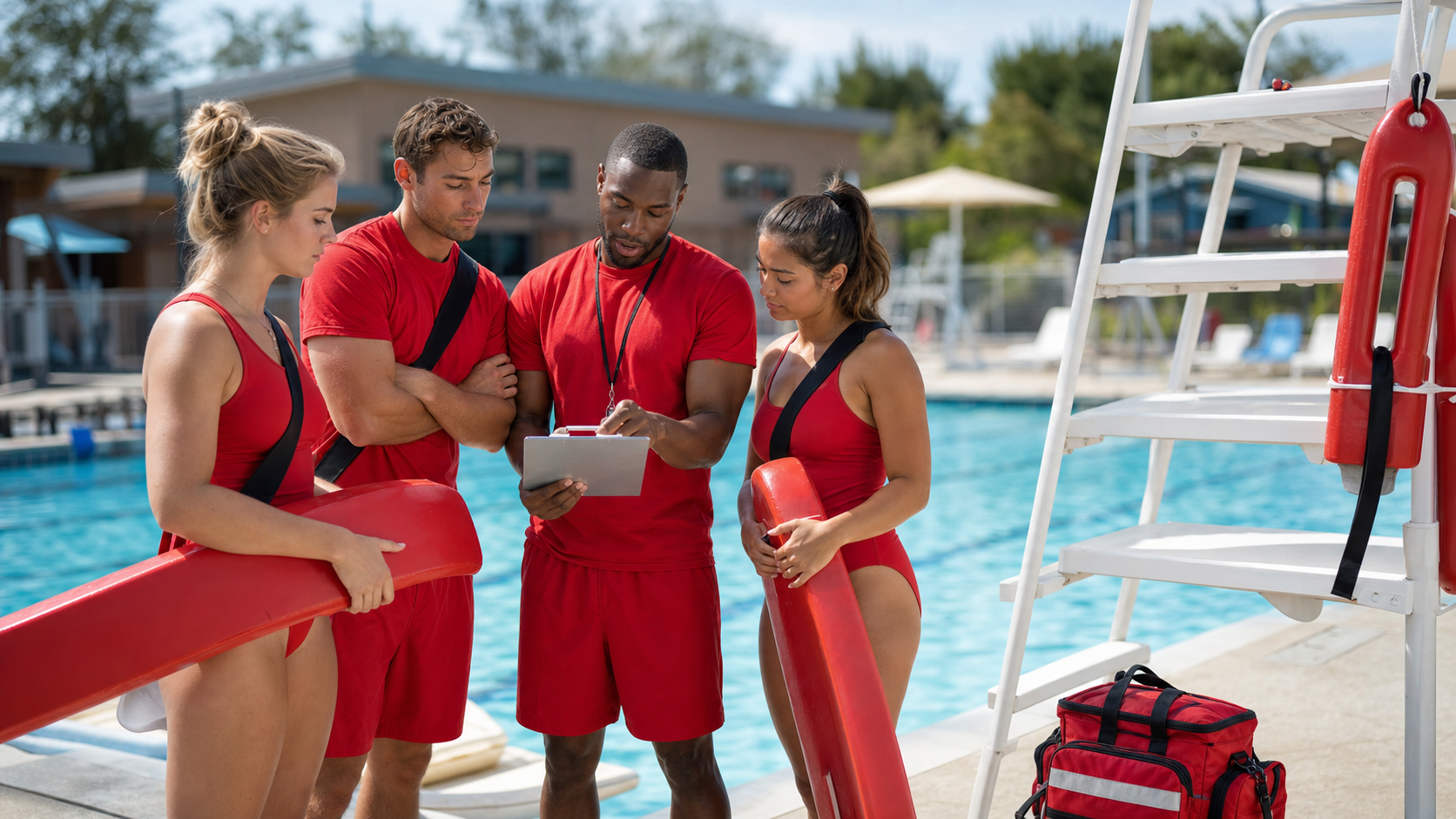
Hiring lifeguards may look simple from the outside. A pool needs staff, a company sends certified lifeguards, and the schedule gets filled.
Behind the scenes, professional lifeguard staffing services involve a much larger system. Recruitment, certification checks, onboarding, scheduling, supervision, payroll coordination, emergency coverage, site communication, and ongoing performance management all have to work together before the first swimmer enters the water.
For facility owners, HOAs, resorts, waterparks, municipalities, and aquatic directors, understanding this model makes vendor selection easier. It also helps explain why a reliable staffing partner is not just filling shifts. The right company is building a labor system around safety, attendance, accountability, and daily pool operations.
Pool Management Inc. supports commercial pools and aquatic facilities with lifeguard staffing services designed for communities, clubs, resorts, aquatic centers, and seasonal pool operations.
The Short Version
A professional lifeguard staffing company manages the full employment pipeline. That usually includes recruiting lifeguards, verifying certifications, onboarding staff, assigning shifts, handling schedule changes, supporting site supervisors, tracking attendance, managing payroll, and helping facilities maintain safer pool operations.
The strongest staffing vendors do not wait until opening week to find guards. They build a staffing plan months ahead, match guards to facility needs, and stay involved throughout the season.
Why Lifeguard Staffing Is a System
Many facility owners first look for lifeguard staffing services when they have a simple problem: not enough certified lifeguards. But the real challenge is rarely one open shift.
The bigger challenge is consistency. Pools need guards who show up on time, understand the site, follow operating procedures, rotate correctly, communicate clearly, and stay alert during long summer days.
That requires more than a contact list of available workers. It requires a repeatable staffing model with recruiting, screening, training, scheduling, supervision, backup coverage, and performance feedback.
A professional aquatic staffing agency works like a labor engine. Its job is to keep the right people moving through the right steps before the facility needs them on deck.
The Staffing Model
A strong staffing company usually follows a clear lifecycle. Each stage supports the next one, which is why weak recruiting can affect scheduling, and poor onboarding can affect performance.
| Staffing stage | What happens behind the scenes | Why it matters |
| Workforce planning | The company reviews facility hours, opening dates, expected attendance, and staffing needs | Builds the staffing target before hiring begins |
| Lifeguard recruitment | Candidates are sourced through job listings, referrals, schools, returning staff, and local networks | Creates enough applicants before peak season |
| Certification review | Lifeguard, CPR, first aid, and other required credentials are checked | Helps confirm staff meet role requirements |
| Screening | Candidates are reviewed for availability, maturity, communication, and reliability | Reduces no-shows and poor fit |
| Onboarding | Guards learn company standards, payroll steps, site expectations, and reporting rules | Prepares staff before the first shift |
| Scheduling | Staff are assigned based on availability, certification, location, and facility need | Keeps coverage organized |
| Site deployment | Guards are placed at pools, clubs, resorts, or aquatic facilities | Turns the labor plan into daily coverage |
| Supervision | Managers monitor attendance, performance, breaks, rotations, and incidents | Supports accountability |
| Season support | The company handles callouts, replacements, schedule changes, and communication | Keeps operations stable |
| End-of-season review | Performance, staffing gaps, and facility feedback are reviewed | Improves next season’s plan |
This lifecycle is the main difference between casual hiring and professional aquatic labor management.
Step 1: Planning the Labor Need
Professional staffing starts before applications arrive. The company first needs to understand the facility’s operating model.
A small community pool may need a few certified lifeguards during limited hours. A resort pool may need longer coverage, guest-facing professionalism, and flexible staffing around occupancy. A waterpark may require larger teams, zone coverage, rotations, supervisors, and more detailed operating procedures.
The staffing company typically reviews:
- Pool opening and closing dates
- Daily operating hours
- Weekend and holiday demand
- Number of lifeguard chairs or zones
- Pool size and layout
- Guest or resident volume
- Special events and pool parties
- Required certifications
- Local or facility-specific rules
- Supervisor needs
- Backup coverage expectations
This planning phase helps avoid a common staffing failure: hiring without knowing the true coverage requirement.
Step 2: Lifeguard Recruitment
Lifeguard recruitment is one of the hardest parts of seasonal pool staffing. Most facilities need many guards at the same time other pools, camps, clubs, municipalities, and waterparks are also hiring.
That is why professional staffing companies usually recruit early and use several channels at once.
| Recruitment channel | Why it works |
| Returning lifeguards | They already understand the job and may need less onboarding |
| Referral programs | Current staff often know candidates with similar availability |
| Local schools and colleges | Many seasonal guards are students |
| Job boards | Helps reach first-time applicants |
| Community outreach | Builds awareness before pool season |
| Certification classes | Connects new guards with staffing opportunities |
| Past applicant lists | Re-engages candidates from previous seasons |
Recruitment is not only about volume. A staffing company also has to evaluate who is likely to complete certification, accept shifts, commute reliably, and stay through the season.
For people looking to join the field, Pool Management Inc. also maintains a lifeguard jobs page for candidates interested in seasonal aquatic work.
Step 3: Certification and Readiness
Facility owners often ask for certified lifeguards, but certification management has details behind it. A staffing company should know what credentials are required, when they expire, and whether the guard is ready for the specific facility environment.
Certification review may include:
- Lifeguard certification
- CPR certification
- First aid training
- AED training
- Water rescue skills
- Facility-specific orientation
- Local requirements where applicable
- Renewal timelines
- Documentation storage
A certified lifeguard still needs site readiness. For example, guarding a quiet neighborhood pool is different from guarding a busy aquatic center or resort pool.
That is why strong staffing companies combine certification checks with onboarding, site expectations, and supervisor support.
Step 4: Matching Guards to Facilities
Not every lifeguard is right for every facility. Professional staffing companies look at more than open availability.
The matching process may consider distance, transportation, experience level, personality, maturity, schedule consistency, comfort with crowds, and ability to handle guest interaction.
| Facility type | Staffing fit to consider |
| HOA pool | Reliable attendance, rule enforcement, resident communication |
| Resort pool | Guest service, professionalism, flexible scheduling |
| Country club | Member interaction, presentation, consistency |
| Waterpark | High-energy guarding, rotations, team coordination |
| Municipal pool | Public-facing work, crowd management, procedure discipline |
| Aquatic center | Program awareness, swim lesson traffic, lane usage |
| Apartment or townhome pool | Independent judgment and clear reporting |
Good staffing is not just about placing a person in a chair. It is about assigning the right guard to the right operating environment.
Step 5: Lifeguard Scheduling
Lifeguard scheduling is where many staffing systems succeed or fail. A schedule has to balance facility needs with employee availability, labor rules, certifications, time-off requests, transportation limits, and unexpected callouts.
For seasonal pools, scheduling is even more complicated because staff availability changes during exams, vacations, holidays, summer school, sports, and end-of-season transitions.
A professional staffing company usually manages:
- Base weekly schedules
- Weekend coverage
- Holiday staffing
- Shift swaps
- Callouts
- Replacement coverage
- Overtime awareness
- Supervisor coverage
- Weather-related changes
- Special event staffing
- End-of-season availability changes
The best schedules are built with backup plans. A perfect-looking schedule can fail quickly if there is no process for illness, transportation problems, or last-minute changes.
Step 6: On-Site Supervision
A lifeguard staffing company should not disappear after sending names for the schedule. On-site supervision and field support are important parts of quality control.
Depending on the contract, supervision may include site visits, head lifeguards, area supervisors, manager check-ins, attendance reviews, uniform checks, rotation reviews, and performance coaching.
| Supervision area | What managers look for |
| Attendance | Guards arrive on time and complete assigned shifts |
| Positioning | Guards stay in assigned zones or chairs |
| Rotation discipline | Breaks and chair rotations happen properly |
| Professionalism | Staff follow appearance, phone, and conduct standards |
| Communication | Issues are reported quickly and clearly |
| Rule enforcement | Facility rules are applied consistently |
| Incident response | Staff know what to do when problems occur |
| Documentation | Reports are completed when needed |
This layer is one reason facility owners often choose professional support instead of trying to manage every guard directly.
Step 7: Communication With the Facility
Clear communication separates a reliable aquatic staffing agency from a basic hiring service. Facility owners need to know who is scheduled, who to contact, what happened during incidents, and how staffing issues are being handled.
A strong communication process usually includes:
- Main account contact
- Emergency contact process
- Schedule sharing
- Callout updates
- Incident reporting
- Performance updates
- Staffing concern escalation
- Weather or closure communication
- End-of-week or end-of-month reporting
Good communication reduces surprises. It also helps facility owners feel confident that staffing problems are being managed before they become resident, guest, or member complaints.
For facilities that need staffing along with broader pool operations, aquatic management services can connect labor planning with maintenance, safety procedures, and daily aquatic operations.
Step 8: Payroll and Labor Management
Aquatic labor management also includes employment administration. Facility owners may not see this work, but it affects how smoothly the season runs.
Depending on the vendor model, the staffing company may handle hiring paperwork, payroll, timekeeping, wage questions, tax documents, scheduling software, attendance records, and employee communication.
This matters because lifeguards are often seasonal employees with changing schedules. If payroll and timekeeping are disorganized, staff frustration can quickly turn into turnover.
A professional staffing company should have a process for:
- Employee onboarding forms
- Time clock or timesheet tracking
- Payroll schedules
- Missed punch corrections
- Shift approvals
- Manager review
- Employee questions
- Labor cost reporting where applicable
Strong back-office systems support strong poolside coverage.
What Facility Owners Should Expect
A professional staffing vendor should be able to explain its model clearly. If the process feels vague before the contract is signed, it may feel even less organized during the season.
| What to expect | Why it matters |
| Early staffing plan | Prevents last-minute hiring pressure |
| Certification tracking | Confirms guards meet role requirements |
| Schedule management | Keeps coverage organized |
| Backup process | Reduces disruption from callouts |
| Supervisor support | Improves accountability |
| Incident documentation | Creates operational records |
| Clear contacts | Helps owners know who to call |
| Seasonal review | Improves future staffing plans |
Facility owners should ask how the company handles both normal days and difficult days. The real test of staffing services is not when every guard arrives on time. It is when someone calls out, weather changes the schedule, a resident complains, or an incident needs documentation.
Vendor Evaluation Scorecard
Before choosing a lifeguard staffing partner, facility owners should compare vendors by process, not only by price.
| Evaluation area | Strong answer | Weak answer |
| Recruitment | Starts early and uses multiple channels | Waits until close to opening |
| Certification | Tracks credentials and expiration dates | Assumes candidates are ready |
| Scheduling | Uses clear systems and backup coverage | Handles changes informally |
| Supervision | Provides managers or field support | Sends guards with little oversight |
| Communication | Defines contacts and reporting process | Leaves owners guessing |
| Training | Includes onboarding and site expectations | Relies only on certification |
| Callouts | Has replacement procedures | Reacts shift by shift |
| Reporting | Documents incidents and staffing issues | Provides limited records |
| Fit | Matches staff to facility type | Assigns whoever is available |
This scorecard helps owners evaluate whether a company is truly managing staffing or simply trying to fill chairs.
Red Flags in Lifeguard Staffing Services
Some staffing problems are visible before the season begins. Facility owners should pay attention to vague answers, missing details, and unclear accountability.
Red flags include:
- No clear recruitment timeline
- No explanation of certification tracking
- No backup plan for callouts
- No supervisor or manager contact
- No written scheduling process
- No incident reporting expectations
- No plan for holidays or peak weekends
- No discussion of site orientation
- No clarity on uniforms or conduct standards
- No process for replacing underperforming guards
A vendor does not need a complicated answer for everything. But it should have a clear answer for the basics.
How Staffing Supports Safety
Lifeguards are one part of pool safety, not the entire safety system. A well-run aquatic facility also needs rules, signage, emergency equipment, maintenance, communication, water quality management, and documented procedures.
That said, staffing plays a major role in daily safety. Lifeguards help monitor swimmer behavior, respond to emergencies, support rule enforcement, and communicate concerns to supervisors or facility managers.
When staffing is weak, the safety system feels weaker too. Uncovered shifts, distracted guards, poor rotations, unclear supervision, and weak reporting can all create operational stress.
Facilities can strengthen this area by connecting staffing decisions with broader pool safety planning and aquatic water safety practices.
Questions To Ask a Staffing Company
Before hiring a staffing partner, facility owners should ask practical questions that reveal how the company actually operates.
- When do you begin lifeguard recruitment for the season?
- How do you verify lifeguard certifications?
- What onboarding do guards receive before their first shift?
- How do you match lifeguards to specific facilities?
- Who builds and manages the schedule?
- What happens when a lifeguard calls out?
- Do you provide supervisors or field managers?
- How are incidents documented?
- How do facility owners receive staffing updates?
- What happens if a guard is not performing well?
- How are holidays and pool parties staffed?
- Do you handle payroll and employee administration?
- What reports or records will we receive?
- How do you prepare for end-of-season staff availability changes?
- Who is our main contact during the season?
These questions help separate organized staffing companies from vendors that are still building the process as they go.
Best Fit Facilities
Lifeguard staffing services are especially useful for facilities that need reliable seasonal coverage but do not want to manage every employment detail internally.
They are often a strong fit for:
- HOA pools
- Apartment and townhome communities
- Country clubs
- Resort pools
- Hotels with pool amenities
- Waterparks
- Municipal pools
- Swim clubs
- Aquatic centers
- Camps and recreation facilities
Each facility type has different needs. A good staffing partner should adapt the model rather than use the same staffing plan everywhere.
The Best Staffing Companies Are Proactive
A professional staffing company should think ahead. That means recruiting before the season, confirming certifications before opening, preparing backup coverage before the first callout, and communicating before small issues become major complaints.
Facility owners should look for vendors that can explain how they plan, recruit, train, schedule, supervise, and respond. A staffing company that can describe its system clearly is usually easier to work with during the season.
The best model is simple to understand but disciplined behind the scenes. Guards know where to go, supervisors know what to check, facility owners know who to call, and the pool has a better chance of operating smoothly.
If your facility is reviewing seasonal pool staffing, certified lifeguards, or aquatic labor management, you can contact Pool Management Inc. to discuss the right staffing approach for your location.
FAQs
What do lifeguard staffing services include?
Lifeguard staffing services usually include recruitment, certification review, onboarding, scheduling, placement, supervision, callout support, payroll coordination, and communication with the facility.
Some companies may also support incident reporting, pool operations, safety planning, and seasonal management.
How do lifeguard staffing companies recruit guards?
Lifeguard staffing companies recruit through returning employees, referrals, job boards, schools, community outreach, certification programs, and seasonal hiring campaigns.
Strong companies begin recruitment early because many facilities compete for certified lifeguards before summer.
What makes a lifeguard certified?
A certified lifeguard has completed required training in water rescue, CPR, first aid, and emergency response through an accepted certification program.
Facility owners should confirm that certifications are current and appropriate for the pool environment.
Why is lifeguard scheduling difficult?
Lifeguard scheduling is difficult because many guards are seasonal employees with changing availability, school calendars, vacations, transportation limits, and time-off requests.
The schedule also needs backup coverage for illness, holidays, weather changes, and special events.
What is an aquatic staffing agency?
An aquatic staffing agency provides trained pool staff such as lifeguards, attendants, supervisors, or aquatic support personnel.
Its role is to recruit, screen, schedule, manage, and support staff so facilities can operate with more reliable coverage.
Should facility owners hire lifeguards directly or use a staffing company?
Direct hiring may work for facilities with strong internal management and enough time to recruit, train, schedule, and supervise staff.
A staffing company may be better when the facility needs seasonal coverage, backup support, payroll coordination, supervision, and a more structured labor system.
What should I ask before choosing a lifeguard staffing vendor?
Ask about recruitment timelines, certification tracking, scheduling systems, backup coverage, supervision, incident reporting, payroll handling, communication, and replacement procedures.
A strong vendor should explain the full staffing model, not just promise to provide guards.