
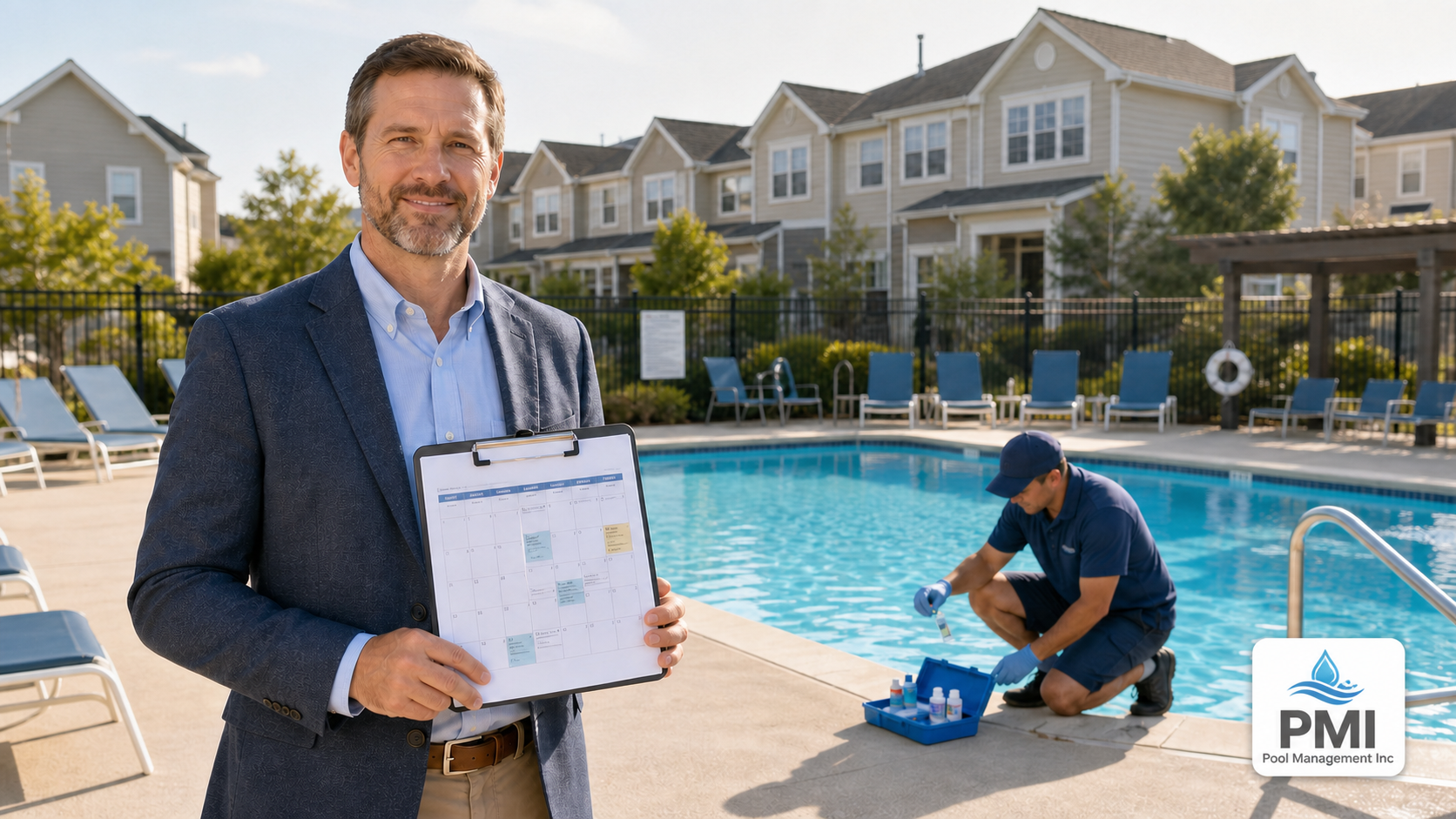
An HOA pool does not stay clean, clear, and resident-ready by accident. It needs a realistic maintenance schedule that matches pool size, resident usage, weather, equipment condition, and seasonal demand.
For HOA boards, the hard part is not knowing that service is needed. The hard part is knowing how often each task should happen, what should be handled daily, what can be done weekly, and what belongs in the seasonal budget.
This guide breaks down a practical HOA pool maintenance schedule for community pools, including cleaning frequency, chemical testing, inspections, equipment checks, seasonal care, and budget planning. For boards that want outside help managing the full scope, commercial pool management services can include pool cleaning and maintenance, lifeguard staffing, chemical management, facility upgrades and repairs, consultation, compliance support, and safety-focused pool operations.
Quick Answer
Most HOA pools need routine visual checks daily during the open season, professional cleaning at least weekly, chemical testing multiple times per week, and deeper inspections monthly, seasonally, and before opening.
Busy community pools often need more frequent service, especially during hot weather, heavy weekend use, storms, holidays, swim events, or repeated water-quality issues.
Why Frequency Matters
A community pool is different from a backyard pool. More swimmers, more sunscreen, more debris, more rule enforcement, and more resident expectations all increase the need for consistent service.
A weak service schedule usually creates the same problems: cloudy water, algae risk, clogged baskets, resident complaints, emergency chemical adjustments, equipment strain, and avoidable closures. Pool water testing frequency often changes based on factors such as water temperature, pool size, swimmer volume, and how often the pool is used.
For HOA boards, the goal is not to overpay for unnecessary visits. The goal is to create a schedule that protects water quality, safety, equipment life, and resident satisfaction.
Board Reality: A pool that is serviced too little usually costs more later through emergency visits, repair approvals, complaints, and avoidable downtime.
Baseline Service Schedule
The right HOA pool maintenance schedule depends on the property, but most boards can start with a baseline cadence and adjust from there.
Use this table as a planning framework, not a fixed rule. Local requirements, vendor recommendations, usage patterns, and pool conditions should guide the final schedule.
| Task | Realistic frequency | Why it matters |
| Visual pool area check | Daily during open season | Catches obvious safety, cleanliness, and access issues |
| Debris removal | Daily to several times weekly | Keeps water and deck areas presentable |
| Chemical testing | 2–3 times weekly or more during peak season | Helps maintain balanced water before problems grow |
| Full cleaning service | Weekly minimum for low-use pools; more often for busy pools | Supports clarity, cleanliness, and resident experience |
| Skimmer and basket checks | Several times weekly | Prevents flow issues and debris buildup |
| Equipment room check | Weekly | Finds pump, filter, leak, and feeder concerns |
| Safety equipment inspection | Weekly to monthly | Confirms rescue and emergency items are present |
| Formal HOA pool inspection | Monthly and seasonally | Helps boards document conditions |
| Deep service tasks | Monthly or as needed | Handles filters, tile, deck, and equipment issues |
| Seasonal opening and closing | Before and after pool season | Prepares the pool for use or protects it off-season |
Many pool care references suggest testing chlorine and pH two or three times per week, total alkalinity weekly, and calcium hardness or cyanuric acid monthly. HOA pools may need more frequent checks than a private pool when usage, heat, or local operating requirements are higher.
Daily Pool Checks
Daily checks are not always full professional service visits. In many communities, they are quick visual reviews by a manager, lifeguard, attendant, maintenance team member, or vendor.
The purpose is to catch problems before residents do. A daily check can identify trash, broken furniture, open gates, cloudy water, low water level, damaged signs, missing safety items, or obvious equipment concerns.
| Daily check item | What to look for |
| Water appearance | Cloudiness, discoloration, foam, floating debris |
| Deck condition | Trash, glass, trip hazards, standing water |
| Gates and access | Self-closing gates, locks, fobs, codes |
| Furniture | Broken chairs, blocked walkways, missing umbrellas |
| Safety items | Ring buoy, throw rope, rescue tube, first aid access |
| Signs | Pool rules, emergency information, depth markers |
| Restrooms | Cleanliness, supplies, drainage, odor |
| Resident behavior | After-hours use, guest issues, crowding |
This daily review is especially important for self-managed HOA pools. A vendor may handle scheduled service, but someone still needs to notice what happens between visits.
If a pool is open seven days a week, residents expect it to look ready seven days a week.
Weekly Pool Service
Weekly pool service is the minimum planning point for many HOA pools, but it should not be treated as enough for every community. A quiet townhome pool may be fine with weekly professional service plus daily visual checks, while a large community pool may need multiple vendor visits per week.
A good weekly service visit should include more than a quick skim. It should create a record the board can review.
| Weekly service task | What should happen |
| Skim and remove debris | Clean the water surface and obvious debris |
| Brush walls and steps | Reduce buildup and algae-prone areas |
| Vacuum as needed | Remove settled debris from the pool floor |
| Empty baskets | Clear skimmer and pump baskets |
| Test and balance water | Check sanitizer, pH, and related chemistry |
| Check equipment | Look at pumps, filters, feeders, leaks, and pressure |
| Inspect deck basics | Note visible hazards, furniture issues, or damage |
| Report findings | Provide readings, photos, notes, and follow-up items |
Routine maintenance schedules help protect the life of a pool, and clean water with balanced chemistry is central to swimming pool maintenance. For boards comparing vendors, aquatic facility maintenance should be evaluated by scope, reporting, response time, and seasonal planning rather than price alone.
Board Tip: If your weekly service report only says “pool serviced,” ask for more detail. Readings, photos, and issue notes make the service easier to manage.
Chemical Testing Cadence
The pool chemical testing schedule should be more frequent than many boards expect. Water can change quickly after heavy use, rain, heat, debris, sunscreen, or equipment problems.
During the open season, sanitizer and pH should usually be checked several times per week. Alkalinity, calcium hardness, stabilizer, and other readings can often follow a less frequent schedule unless water problems appear.
| Chemical item | Planning frequency | Notes |
| Sanitizer/chlorine | 2–3 times weekly or more | Check more often during heat or heavy use |
| pH | 2–3 times weekly or more | Affects comfort, sanitizer performance, and balance |
| Total alkalinity | Weekly | Helps stabilize pH |
| Calcium hardness | Monthly | Important for surface and equipment protection |
| Cyanuric acid/stabilizer | Monthly | Helps evaluate chlorine protection in outdoor pools |
| Salt, if applicable | Monthly or per system needs | Follow equipment requirements |
| Metals/phosphates | As needed | Usually checked when problems appear |
One testing guide lists pH and free chlorine testing two to three times per week, total alkalinity weekly, and calcium hardness and cyanuric acid monthly. Another reference notes that testing frequency should increase during peak use and warmer conditions.
For HOA pools, testing should also happen before and after special events, holiday weekends, storms, or large pool parties. Those are the moments when chemistry can shift quickly.
Inspection Schedule
HOA pool inspections are different from routine cleaning. Cleaning keeps the pool presentable, while inspections help the board document whether equipment, safety items, access points, and pool surfaces are in good condition.
A practical inspection schedule should include weekly light checks, monthly documented inspections, and seasonal inspections before opening and after closing.
| Inspection type | Frequency | What it covers |
| Light visual inspection | Daily or several times weekly | Deck, water, gates, furniture, signs |
| Safety equipment check | Weekly | Rescue gear, first aid supplies, phone, signage |
| Equipment inspection | Weekly to monthly | Pumps, filters, feeders, gauges, leaks |
| Formal facility inspection | Monthly | Written checklist with photos and notes |
| Pre-season inspection | Before opening | Repairs, safety items, equipment, access |
| Post-season inspection | After closing | Damage, winterization, capital planning |
A pool facility inspection checklist can help boards review items such as test kits, first aid supplies, rescue equipment, pool rules signs, water safety signs, self-closing gates, skimmers, drain grates, filtration equipment, pump equipment, chemical feed equipment, lighting, deck condition, and ADA lift chairs.
The best inspection process is simple enough to repeat. If the checklist is too complicated, it will be ignored.
Seasonal Maintenance Plan
Seasonal pool care is where HOA boards can prevent many budget surprises. The pool should not be opened at the last minute and then managed reactively all summer.
A stronger plan starts months before opening day and continues after closing.
| Season phase | Board or vendor action |
| 4–6 months before opening | Review prior-year issues, contracts, and budget |
| 2–3 months before opening | Inspect equipment, gates, furniture, signs, and deck |
| 1 month before opening | Confirm service schedule, staffing, chemicals, and access |
| Opening week | Balance water, test systems, clean deck, send resident rules |
| Peak season | Increase checks during heat, storms, holidays, and events |
| Late season | Review repairs, usage complaints, and closing needs |
| After closing | Document damage, winterize if needed, plan capital work |
This seasonal approach helps boards make decisions before the community is already frustrated. It also gives vendors time to order parts, schedule repairs, and prepare staffing if lifeguards or attendants are needed.
Budgeting by Service Level
Not every HOA pool needs the same service frequency. The right budget depends on usage, pool type, staffing, location, resident expectations, and risk tolerance.
Boards can think about service levels instead of asking, “What is the cheapest weekly pool service?”
| Service level | Best fit | Typical cadence |
| Basic seasonal care | Small, low-use pools with limited hours | Weekly service plus daily visual checks |
| Standard HOA care | Average community pool with regular resident use | 2–3 professional touchpoints weekly during season |
| High-use community care | Larger HOA pools, busy weekends, frequent guests | 3–5 service touchpoints weekly |
| Staffed pool care | Pools with lifeguards or attendants | Daily checks plus vendor service schedule |
| Premium uptime care | Large communities with high resident expectations | Daily operational review with frequent vendor support |
The board should also budget for more than cleaning. A realistic HOA pool budget includes chemicals, equipment repairs, inspections, opening and closing work, access control, furniture replacement, safety supplies, and possible lifeguard or attendant staffing.
If the pool is part of a larger aquatic program, aquatic management services may be a more complete fit than basic pool cleaning.
When to Increase Service
A pool schedule should be reviewed during the season, not just before it starts. If the same issues repeat, the board may need more service, better reporting, or a different vendor scope.
Increase service frequency when the pool shows patterns like these:
- Cloudy water after weekends
- Algae forming on steps, walls, or corners
- Repeated complaints about debris
- Chemical readings changing quickly
- Baskets filling before the next visit
- Heavy sunscreen, leaves, pollen, or storm debris
- Frequent pool parties or guest crowding
- Equipment pressure rising between visits
- Residents reporting strong odor or eye irritation
- Closures happening more than expected
A single issue may not justify a contract change. A repeated pattern usually does.
Budget Note: Paying for one extra weekly visit during peak season may cost less than repeated emergency calls, closures, and resident complaints.
Vendor Reporting
A maintenance schedule only works if the board can verify what happened. That is why vendor reporting should be part of the contract.
A good HOA pool service report should tell the board what was checked, what readings were taken, what was cleaned, what needs repair, and whether follow-up is required.
| Report item | Why boards need it |
| Date and time of visit | Confirms service occurred |
| Chemical readings | Shows water balance history |
| Chemicals added | Explains treatment actions |
| Cleaning tasks completed | Clarifies service scope |
| Equipment notes | Flags pump, filter, feeder, or leak issues |
| Photos | Documents visible problems or repairs |
| Follow-up items | Helps boards approve work faster |
| Closure notes | Explains resident impact |
Without reporting, the board is left managing complaints with guesses. With reporting, the board can make decisions based on records.
HOA Pool Checklist
Use this checklist to build or review your HOA pool maintenance schedule.
- Confirm opening and closing dates.
- Review last season’s complaints and closures.
- Decide who performs daily visual checks.
- Set weekly cleaning expectations.
- Confirm chemical testing frequency.
- Schedule monthly inspection reviews.
- Review safety equipment and signage.
- Check gates, locks, fobs, and access controls.
- Confirm pump, filter, and chemical feeder inspections.
- Budget for chemicals, repairs, and emergency service.
- Plan extra service for holidays and high-use weekends.
- Require written vendor reports.
- Review performance at mid-season.
- Complete a post-season inspection.
- Use findings to plan next year’s budget.
A checklist gives the board a repeatable process. It also helps new board members understand what the pool actually requires.
Common Mistakes
Budgeting for Weekly Service Only
Weekly pool service may sound simple, but it can be too light for busy community pools. HOA boards should match service frequency to actual usage.
If the pool looks bad by Friday, a Monday-only visit is not enough.
Ignoring Chemical Testing
Clear water does not always mean balanced water. Chemical testing should follow a schedule, especially during peak season.
Testing sanitizer and pH several times per week is a common planning benchmark for pool care.
Skipping Inspection Records
Many boards inspect only when something breaks. That makes it harder to prove when an issue started or whether it was preventable.
Monthly inspection notes can support better repair and budget decisions.
Forgetting Seasonal Costs
Opening, closing, repairs, chemicals, supplies, and equipment issues should not be treated as surprises every year. They belong in the annual pool budget.
Seasonal planning reduces emergency decision-making.
Choosing Vendors by Price Alone
The lowest bid may not include enough visits, chemicals, reporting, emergency response, or inspection support. Boards should compare scope, not just price.
A slightly higher contract with better documentation may save money over the full season.
Final Recommendation
An effective HOA pool maintenance schedule should combine daily visual checks, weekly cleaning, frequent chemical testing, monthly inspections, and seasonal planning. The exact cadence should increase when the pool has heavy use, hot weather, recurring complaints, storm debris, or equipment problems.
For budgeting, boards should think in service levels rather than one fixed weekly visit. A realistic schedule protects water quality, equipment life, resident experience, and the board’s ability to make informed decisions.
If your HOA is reviewing service frequency, vendor scope, inspections, or seasonal pool planning, you can request a pool management bid with your community details and service goals.
Frequently Asked Questions?
How often should an HOA pool be serviced?
Most HOA pools should receive professional service at least weekly during the open season, with more frequent service for busy communities. Daily visual checks are also recommended when the pool is open to residents.
High-use pools may need several professional touchpoints per week.
How often should HOA pool chemicals be tested?
During the swim season, sanitizer and pH are commonly tested two to three times per week or more. Alkalinity is often checked weekly, while calcium hardness and stabilizer may be checked monthly.
Heavy usage, hot weather, storms, and events may require extra testing.
Is weekly pool service enough for an HOA pool?
Weekly service may be enough for a small, low-use HOA pool when combined with daily visual checks. It is often not enough for large communities, heavy weekend use, or pools with frequent debris and chemistry changes.
Boards should review complaints, water clarity, and service reports to decide.
What should be included in HOA pool service?
HOA pool service should include cleaning, skimming, brushing, vacuuming as needed, basket checks, chemical testing, chemical balancing, equipment review, and written reporting.
The contract should clearly define what is included and what costs extra.
How often should HOA pool inspections happen?
Light visual inspections should happen daily or several times weekly during the season. Formal documented inspections are useful monthly, before opening, and after closing.
Inspections should cover safety equipment, gates, signs, deck condition, pool fittings, pumps, filters, and chemical feed equipment.